A Quiet-Luxury Capsule Wardrobe That Still Works After Dark
Eight polished pieces that move from an ordinary workday to dinner without requiring a complete change.

A Thursday begins with a client presentation, includes a rushed coffee between meetings, and ends at a restaurant where the dress code is polished but not formal. That ordinary moment—not an ideal showroom—is the right place to begin.
For women building a smaller wardrobe for work, travel, and spontaneous evening plans, our editorial position is simple: buy around repeatable silhouettes and fabric compatibility, then let one evening piece create the change in mood. It is a more useful filter than a long list of prestige features because it connects the purchase to something that will happen again next week.
Begin with the life around the product
Before opening ten retailer tabs, picture the first month of ownership. Where does the item live? Who reaches for it? What needs to happen when you are tired, late, or moving quickly? A beautiful purchase that requires a perfect routine often becomes beautiful clutter.
The more expensive option should solve a repeated source of friction: better fit, more dependable materials, a quieter motor, clearer controls, or service that extends the useful life. It should not merely add features that sound sophisticated while making the ordinary task slower.
What is worth paying for
Spend first on the blazer and trouser fit. Save on trend-led tops and occasional accessories that do not need to survive weekly wear.
A softly structured blazer that closes cleanly
Confirm this detail in the current product documentation, size chart, care guide, or warranty. Then connect it to a task you perform regularly. If it does not make that task easier, more comfortable, or more reliable, it should not move the option higher on your shortlist.
Full-length trousers with enough hem allowance
Confirm this detail in the current product documentation, size chart, care guide, or warranty. Then connect it to a task you perform regularly. If it does not make that task easier, more comfortable, or more reliable, it should not move the option higher on your shortlist.
A silk or fluid satin layer that works alone
Confirm this detail in the current product documentation, size chart, care guide, or warranty. Then connect it to a task you perform regularly. If it does not make that task easier, more comfortable, or more reliable, it should not move the option higher on your shortlist.
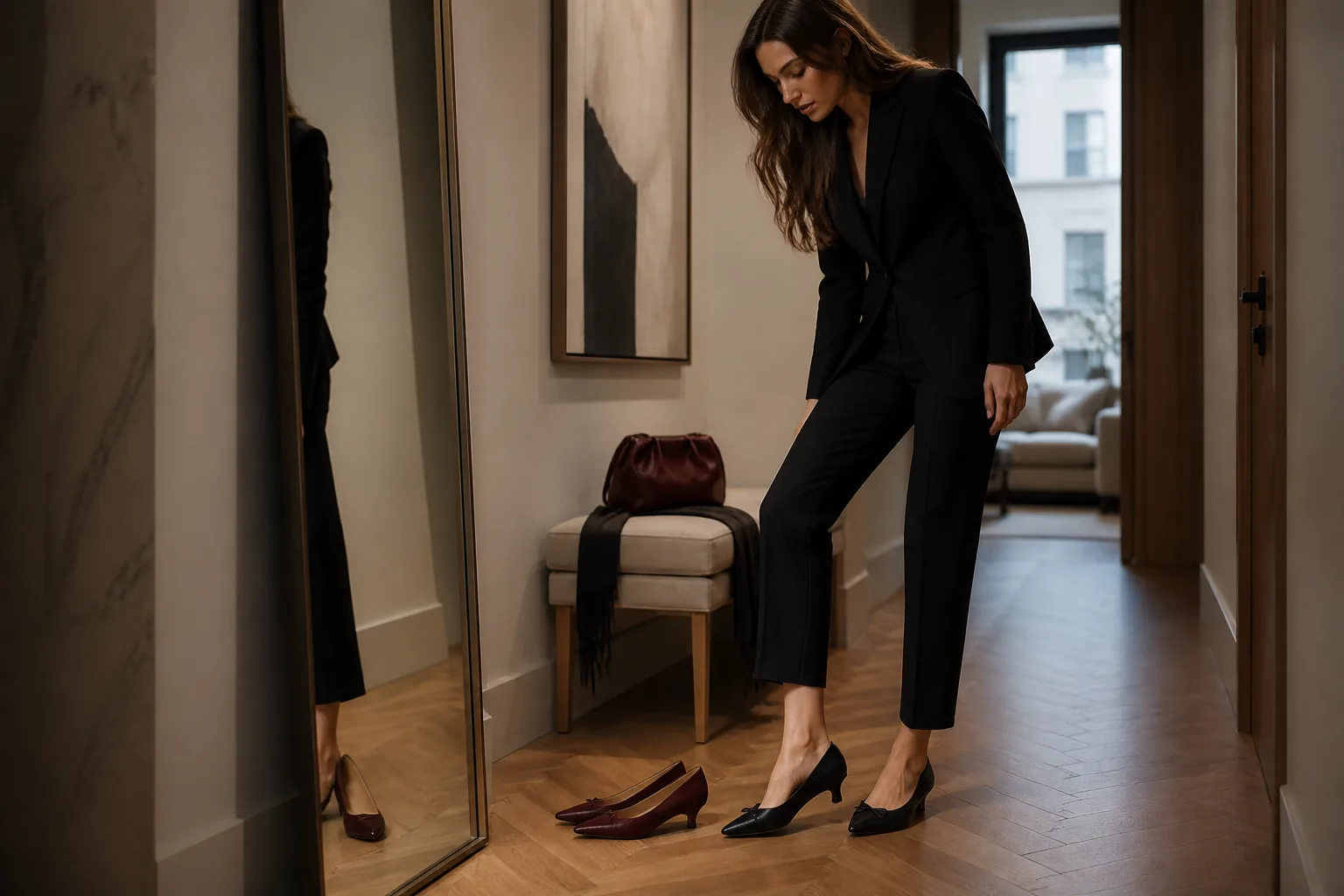
Shoes you can wear through the commute
Confirm this detail in the current product documentation, size chart, care guide, or warranty. Then connect it to a task you perform regularly. If it does not make that task easier, more comfortable, or more reliable, it should not move the option higher on your shortlist.
The tradeoff to understand
A tightly neutral wardrobe is easy to combine, but without contrast in texture or proportion it can feel flat rather than luxurious. Neither side is universally more elevated. The better purchase is the one whose limitation will interrupt your day less often.
Red flags before checkout
Luxury pricing can make an item feel pre-vetted. It is not. Slow down when the practical details are absent or when a retailer emphasizes a mood without explaining care, dimensions, compatibility, returns, or ongoing cost.
- A capsule built entirely around one exact shade.
- Delicate pieces that require dry cleaning after every wear.
- Occasion shoes that have never survived a two-hour dinner.
Build a three-option shortlist
Keep one sensible baseline, one balanced choice, and one premium option. Compare the same four things across all three: the material or technical specification that affects daily use, the ownership work required, the return path if fit is wrong, and the cost of any accessories or consumables.
Prices and availability move quickly, so a temporary discount should be the last filter rather than the first. Decide what fits the scenario, verify the current details, and only then compare the final cost.
Before you buy
- Verify a softly structured blazer that closes cleanly in the latest product information.
- Verify full-length trousers with enough hem allowance in the latest product information.
- Verify a silk or fluid satin layer that works alone in the latest product information.
- Verify shoes you can wear through the commute in the latest product information.
- Read the current warranty, care guidance, and retailer return terms.
- Measure the space, body, bag, or routine the product has to fit.
Frequently asked questions
What should I decide before comparing products?
Start with the real situation: A Thursday begins with a client presentation, includes a rushed coffee between meetings, and ends at a restaurant where the dress code is polished but not formal. Write down the two constraints that would make the purchase fail, then compare only options that clear them.
When is the premium option worth it?
Spend first on the blazer and trouser fit. Save on trend-led tops and occasional accessories that do not need to survive weekly wear.
How should I use reviews and retailer pages?
Look for repeated ownership patterns across several sources, then verify current dimensions, materials, compatibility, warranty, care, and return terms with the manufacturer or retailer. A reviewer may have a different body, room, climate, or routine.
A worthwhile purchase should bring clarity to the routine—not more management. If you cannot describe the specific comfort, function, or pleasure it will add, waiting is often the most luxurious decision.
Related stories
More Style
Weather-Smart Layering for a Polished Commute
A refined layering system for mornings that begin cold, turn warm, and still include a crowded train.

How to Style Fine Jewelry and a Watch Without Looking Overdone
A restrained formula for combining gold, a watch, and evening details with modern tailoring.
Elegant Evening Shoes You Can Actually Walk In
What heel geometry, lining, and toe shape reveal before a gallery opening turns into a long walk.